Car Stuck in Snow? Here’s What Winnipeg Drivers Need To Know
You’re driving through a Winnipeg snowstorm when suddenly—your tires start spinning. No grip. No forward movement. You’re stuck. Whether you’ve slid into a snowbank, gotten trapped in a drift, or simply lost traction on an unplowed street, being stuck in snow is frustrating and potentially dangerous.
Every winter, thousands of Winnipeg drivers find themselves in this exact situation. But knowing what to do—and what not to do—can make the difference between a quick recovery and hours of waiting in the cold. This guide covers immediate safety steps, DIY techniques to try, and when it’s time to call for professional winch-out and recovery service.
Step 1: Stay Calm and Assess Your Safety First
The moment you realize you’re stuck, your first priority is safety—not getting unstuck. Before you do anything else, take a moment to assess your situation.
Check Your Surroundings
Are you on a busy street or highway? If other vehicles are passing nearby, turn on your hazard lights immediately. This alerts approaching drivers and reduces the risk of a collision while you’re stationary.
If you’re stuck in a live traffic lane and cannot pull over, do not exit your vehicle. Stay inside with your seatbelt fastened, hazards on, and call 911 if you’re in immediate danger. Visibility is extremely limited during snowstorms, and stepping outside puts you at serious risk.
Move to Safety If Possible
If you can safely move your vehicle even slightly—toward the shoulder, a parking lot, or out of traffic—do so before attempting any recovery. Your safety is always more important than your vehicle’s position.
Step 2: Check Your Exhaust Pipe Immediately
This step is critical and potentially life-saving. Before you run your engine to stay warm, check that your exhaust pipe is not blocked by snow or ice.
When your tailpipe is obstructed, carbon monoxide (CO) can build up inside your vehicle—a colorless, odorless gas that can be fatal within minutes. Every winter, people lose their lives because they didn’t realize their exhaust was blocked.
What to do: Exit your vehicle safely, clear away any snow around the exhaust pipe, and make sure it remains clear if snow continues to accumulate. Check it periodically if you’re running the engine for extended periods.
Step 3: Don’t Spin Your Tires
It’s instinctive to press the gas pedal when you’re stuck, but spinning your tires is one of the worst things you can do. Excessive wheel spin creates heat, which melts the snow beneath your tires and turns it into slippery ice. This makes your situation worse and can damage your tires, transmission, or differential.
Instead, use gentle throttle pressure and avoid any aggressive acceleration. Listen carefully—if you hear your tires spinning, stop immediately and try a different approach.
DIY Techniques: How To Free Your Car From Snow
If you’re stuck but not in immediate danger, there are several techniques you can try to free your vehicle before calling for help.
Clear Snow Around Your Tires
Use a shovel (or improvised tool like an ice scraper, floor mat, or piece of cardboard) to dig out snow from in front of, behind, and underneath your drive wheels. Create a clear path at least 3-4 feet long in both directions.
Pay special attention to snow that’s higher than your vehicle’s ground clearance. If your car is “high-centered”—meaning snow or ice is packed under the chassis—you won’t be able to move no matter how much traction your tires have.
Turn Off Traction Control
Modern vehicles have traction control systems designed to prevent wheel spin on slippery surfaces. While helpful in normal driving, traction control can actually prevent you from getting unstuck by cutting power to your wheels too aggressively.
Locate your traction control button (usually on the dashboard or center console) and turn it off temporarily. This gives you more control over wheel movement and may provide the extra momentum needed to break free.
Use the Rocking Method
This technique uses your vehicle’s momentum to gradually work your way out of being stuck.
- Straighten your steering wheel as much as possible
- Shift into the lowest gear available (or “L” mode on automatic transmissions)
- Gently accelerate forward a few inches, then stop
- Shift into reverse and gently back up a few inches
- Repeat this forward-and-back motion to pack down snow and build momentum
Important: Use minimal throttle. The goal is to create a smooth rocking motion, not to spin your tires. If your wheels start spinning, stop immediately and try a different approach.
Add Traction Under Your Tires
Sometimes all you need is a little extra grip. If you have any of the following materials in your vehicle, place them directly in front of your drive wheels:
- Floor mats: Rubber or carpet mats can provide temporary traction
- Sand or kitty litter: Absorbs moisture and creates friction
- Cardboard: Flatten boxes and slide them under your tires
- Wooden boards or branches: Create a solid surface for your tires to grip
- Salt or ice melt: Helps break down ice (but less effective in deep snow)
Once you’ve placed traction material, gently accelerate. If your tires grip, keep moving—don’t stop until you reach solid, plowed ground.
What NOT To Do When Stuck in Snow
Certain actions can turn a manageable situation into an expensive problem. Avoid these common mistakes:
- Don’t rev your engine excessively: This causes tire spin, overheating, and potential transmission damage
- Don’t leave your vehicle running with a blocked exhaust: Carbon monoxide poisoning is a real and deadly risk
- Don’t jack up your car on snow or ice: The jack will sink and could cause serious injury
- Don’t pour hot water on ice: It can crack your windshield and refreezes almost immediately
- Don’t overexert yourself digging: Heart attacks during snow shoveling are common in extreme cold
- Don’t wander away from your vehicle: Hypothermia and disorientation can occur quickly in blizzard conditions
When To Call For Professional Winch-Out Service
Sometimes DIY efforts aren’t enough—or aren’t safe to attempt. You should call for professional help if:
- Your vehicle is stuck in deep snow or a large drift
- You’re high-centered with snow packed under your chassis
- Your car is stuck on an incline or near a ditch
- You’ve tried rocking and traction aids without success
- You’re stuck in a dangerous location (near traffic, isolated area, extreme cold)
- You don’t have proper tools or clothing to work outside safely
- You have passengers (children, elderly, or individuals with health conditions)
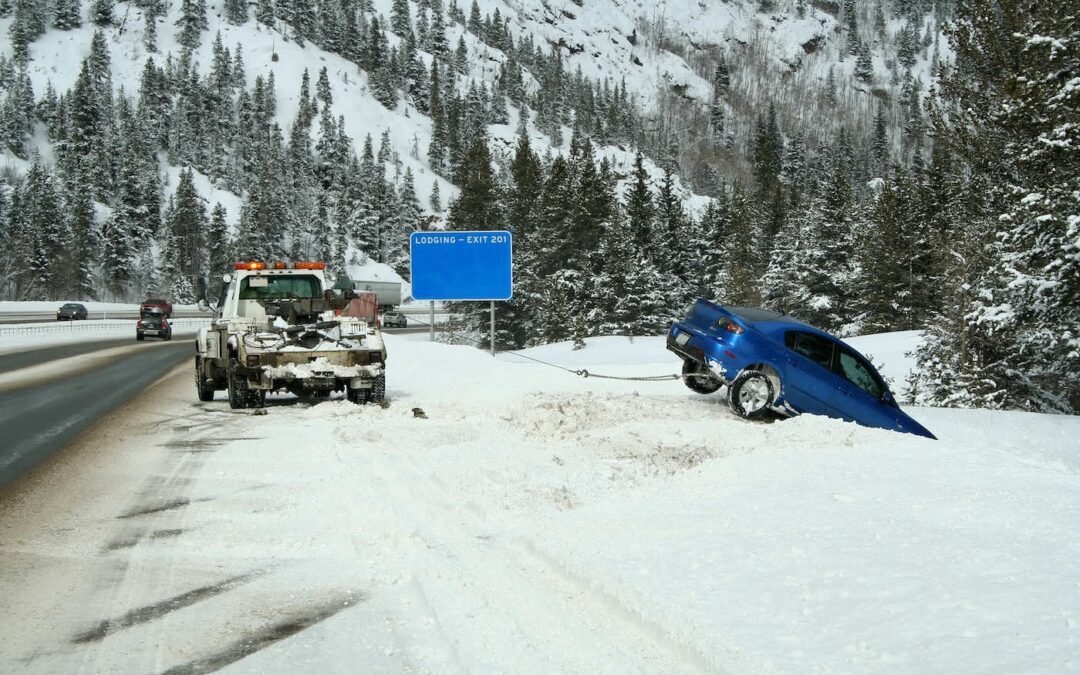
Professional winch-out recovery service uses heavy-duty equipment to safely pull your vehicle free without causing damage. Our operators are trained to handle challenging winter conditions and can extract vehicles from snow, ice, ditches, and embankments.
Staying Safe While Waiting For Help
If you’ve called for roadside assistance or a tow truck, here’s how to stay safe while waiting:
Stay Inside Your Vehicle
Your car provides shelter from wind, cold, and passing traffic. Stay inside with your seatbelt fastened until help arrives. If visibility is poor, other drivers may not see you standing outside.
Run Your Engine Sparingly
To conserve fuel and reduce carbon monoxide risk, only run your engine for 10 minutes per hour to stay warm. Keep a window cracked slightly for ventilation, and ensure your exhaust pipe stays clear of snow accumulation.
Stay Visible
Keep your hazard lights on at all times. If you have reflective triangles, road flares, or a brightly colored cloth, place them near your vehicle to increase visibility to passing drivers and emergency responders.
Conserve Your Phone Battery
Your phone is your lifeline. Reduce screen brightness, close unnecessary apps, and avoid making non-essential calls. Keep your phone warm (cold temperatures drain batteries faster) by keeping it close to your body or inside your jacket.
Stay Warm
Layer clothing if possible. Use blankets, extra jackets, or even floor mats for insulation. Keep moving your fingers and toes to maintain circulation, but avoid overexerting yourself.
How Winnipeg Towing Can Help
Winnipeg Towing provides fast, professional winch-out and recovery services across all Winnipeg neighborhoods—even in the worst winter conditions. Our team responds to stuck vehicles on residential streets, highways, parking lots, and rural areas throughout the city.
We operate 24/7 emergency service, so whether you’re stuck at 3 AM or during a weekend blizzard, help is always available. Our drivers arrive equipped with:
- Heavy-duty winches and recovery straps
- Traction aids and digging equipment
- Experience handling all vehicle types (cars, SUVs, trucks)
- Knowledge of Winnipeg roads and winter conditions
We serve drivers across St. Vital, River Heights, St. Boniface, Garden City, and all surrounding areas.
Preventing Getting Stuck: Winter Driving Tips
The best way to handle being stuck in snow is to avoid it altogether. Here are proven prevention strategies for Winnipeg winters:
- Install winter tires: They provide significantly better traction than all-season tires
- Keep an emergency kit in your car: Include a shovel, sand/kitty litter, blankets, flashlight, and snacks
- Reduce speed in snow: Slower speeds give you better control and stopping ability
- Avoid sudden movements: Gentle acceleration, braking, and steering prevent loss of traction
- Increase following distance: Leave extra space between you and other vehicles
- Stay on plowed roads when possible: Avoid shortcuts through unplowed areas
- Check weather forecasts: Delay travel during severe winter storms when possible
Frequently Asked Questions
How long does it take to get unstuck from snow?
It depends on the severity of the situation. Simple cases where you’re slightly stuck in loose snow may take only a few minutes using rocking techniques. Deeper snow, high-centered vehicles, or icy conditions may require 20-30 minutes or professional winch-out service.
Can AAA or CAA help if I’m stuck in snow?
Yes, if you have a membership. However, during major winter storms, wait times can be several hours due to high call volumes. Winnipeg Towing provides fast service without membership requirements.
Will trying to get unstuck damage my car?
Aggressive tire spinning, excessive revving, or improper techniques can damage your transmission, differential, or tires. Always use gentle throttle and stop immediately if your tires start spinning freely.
Should I call police if I’m stuck in snow?
Only call 911 if you’re in immediate danger (stuck in traffic, medical emergency, or life-threatening conditions). For non-emergency situations, contact roadside assistance or a towing service directly.
How much does winch-out service cost in Winnipeg?
Costs vary based on location, severity, and time of day. Most winch-out services start around $150-200. We provide upfront quotes so you know exactly what to expect before we dispatch.
Can I push my car out of snow?
Yes, if you have help and it’s safe to do so. Have one person steer and gently accelerate while others push from behind or the sides. Never push from directly in front or behind due to the risk of injury if the vehicle suddenly moves.
Stuck in Snow in Winnipeg? We’re Here To Help
Don’t spend hours in the cold trying to free your vehicle. Winnipeg Towing provides fast, professional winch-out and recovery service 24/7 across all Winnipeg neighborhoods. Our experienced operators arrive equipped to handle any winter situation safely and efficiently.
We also offer complete roadside assistance including battery boosts, tire changes, and emergency towing when you need it most.
Stuck in snow right now? Call us immediately: (204) 505-4621
Our team is standing by 24/7 to help Winnipeg drivers get back on the road safely—no matter the weather, time, or location.