
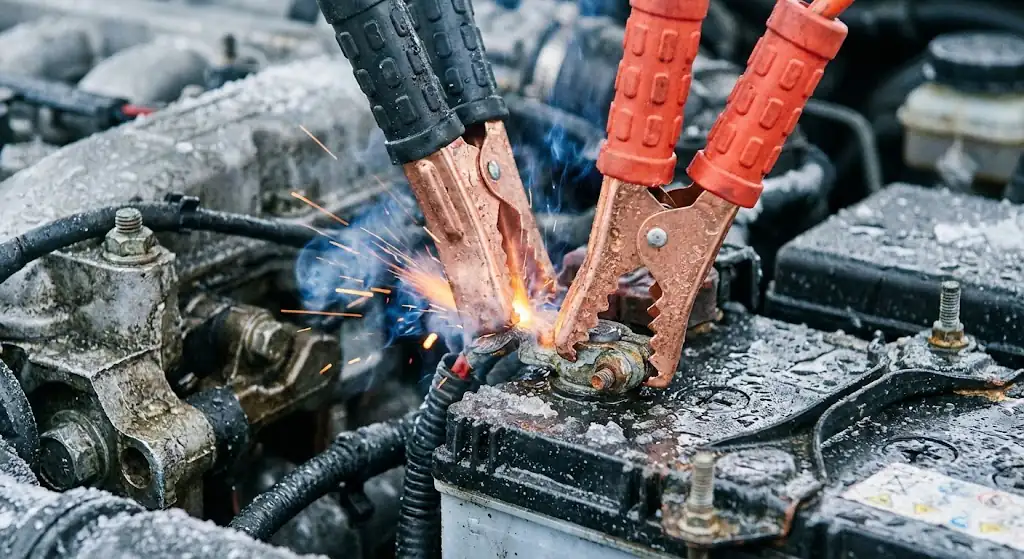
Car Won’t Start in Winnipeg? 7 Common Causes & What To Do
You are running late. You get in your car, turn the key (or press the button), and… nothing. Or a weak click. Or the engine cranks slowly and gives up. Your car won’t start, and you need to figure out why — fast.
In Winnipeg, a car not starting is the single most common reason drivers call for roadside assistance. It happens year-round, but spikes dramatically in winter when extreme cold punishes batteries, thickens engine oil, and tests every electrical connection in the vehicle.
This guide walks you through the 7 most common reasons a car will not start, how to diagnose each one by the symptoms you observe, and whether you need a battery boost, a tow truck, or something else entirely.
Quick Diagnostic: What Happens When You Turn the Key?
Before reading through all seven causes, narrow it down immediately by matching what you hear and see to the most likely problem:
The 7 Most Common Reasons Your Car Won’t Start
Here is each cause in detail — ranked by how frequently we see them in Winnipeg.
Not Sure Which Problem You Have? Call Us.
We diagnose on-site. If it is the battery, we boost it. If it is mechanical, we tow you. One call.
5 Things To Try Before Calling for Help
If your car won’t start and you want to try troubleshooting before calling, here are the safe steps you can take:
Check the dashboard for warning lights. A key/lock symbol means immobilizer. A battery symbol means charging issue. A fuel pump symbol means low fuel. These icons are your first clues.
Try the key fob battery trick. Replace the fob battery if you have a spare, or hold the fob directly against the push-button start. Some vehicles have a key slot hidden inside the fob for physical backup.
Check for obvious battery issues. Open the hood and look for loose or corroded battery cables. If you see heavy white or green buildup on the terminals, that may be your problem. Wiggle the cables — if they move, they are too loose.
Try a portable jump starter if you have one in your emergency kit. If the car starts, the battery was the issue. Drive for 20+ minutes to recharge it.
Check the fuel gauge. It sounds obvious, but an empty tank is embarrassingly common — and cheaper to fix than anything else. If the gauge reads empty, call for fuel delivery rather than a tow.
If none of these resolve it, call (204) 505-4621. Describe what you observe (no lights, clicking, cranking but not firing, etc.) and our dispatcher will recommend the right service — a battery boost, flatbed tow, or fuel delivery — before dispatching.
Battery Boost vs Tow Truck: Which Do You Need?
⚡ You Need a Battery Boost If:
- No lights or dim lights on the dashboard
- Rapid clicking sound when turning the key
- Very slow, sluggish cranking
- Left lights on overnight or car sat unused
Cost: $55–$100 · Book battery boost →
🚛 You Need a Tow Truck If:
- Single loud click — likely bad starter
- Engine cranks normally but will not fire
- Battery has been boosted but dies again repeatedly
- Grinding, knocking, or unusual noises
- Engine starts briefly then immediately dies
Cost: $85–$175 · Book tow →
Not sure? Call (204) 505-4621 and describe the symptoms. Our dispatcher will tell you which service you need before we dispatch — so you only pay for the right solution. For complete pricing, see our 2026 towing cost guide or our affordable towing tips.
How To Prevent No-Start Problems in Winnipeg
Most car not starting issues are preventable with simple maintenance. According to CAA, dead batteries account for more roadside calls than any other issue in Canada — and Natural Resources Canada confirms that extreme cold reduces battery performance dramatically:
- Test your battery before every winter — a free 5-minute test at any auto parts store can reveal a weak battery before it fails. Replace it proactively if it tests marginal or is over 3 years old.
- Clean battery terminals annually — wire brush, dielectric grease, and 5 minutes of work prevents corrosion from stealing your cranking power.
- Use your block heater below –15°C — reduces the cranking demand on your battery and starter, extending the life of both. A timer set for 2 to 3 hours before departure is enough.
- Keep a portable jump starter in your vehicle — a $80 to $150 lithium-ion unit can self-rescue you in minutes. Store it indoors in extreme cold and bring it to the car when needed. Check out our road trip checklist and emergency kit guide for more must-haves.
- Replace the key fob battery annually — a CR2032 battery costs $3 and takes 30 seconds to replace. A dead fob means the immobilizer will not recognize you.
- Keep the fuel tank above half in winter — prevents fuel line freeze-up from condensation and ensures you are never stranded with an empty tank.
When To Stop Troubleshooting and Call for Help
DIY troubleshooting has its limits. Call for professional help when:
- You are in an unsafe location — underground parking with fumes, a busy road, or anywhere you feel vulnerable. Your safety is more important than saving a service call fee.
- It is extremely cold — at –25°C or colder, working under the hood with bare hands risks frostbite. A professional operator has heated gloves, proper tools, and training for cold-weather work.
- You have tried the basics and it still will not start — if a boost did not work, if the key fob replacement did not help, or if the engine cranks but will not fire, the problem needs professional diagnosis.
- You are unsure of the problem — there is no shame in calling (204) 505-4621 and saying “my car won’t start and I do not know why.” Our dispatchers talk through no-start problems every day and can often diagnose the issue over the phone before dispatching.
For more on the full range of services available, see our complete roadside assistance guide. We serve all Winnipeg neighbourhoods and provide 24-hour service year-round.
Frequently Asked Questions
What is the most common reason a car won’t start in Winnipeg?
A dead battery is by far the most common cause — accounting for roughly 70% of all no-start calls in Winnipeg. Extreme cold drains batteries overnight, and batteries over 3 to 4 years old are especially vulnerable. A battery boost at $55 to $100 resolves the issue in most cases.
How much does a battery boost cost in Winnipeg?
A professional battery boost from Winnipeg Towing costs $55 to $100. This includes dispatch, travel to your location, professional-grade boosting equipment, and a basic battery assessment. The price is the same 24/7 — no after-hours surcharges.
My car clicks but won’t start. What does that mean?
Rapid clicking (many clicks) means the battery has some power but not enough to turn the starter — a battery boost should fix it. A single loud click usually indicates a failed starter motor, which requires a tow to a mechanic. Call (204) 505-4621 and describe the sound — we can usually diagnose it over the phone.
My car cranks but won’t start. Is that the battery?
If the engine cranks at normal speed (sounds healthy) but will not fire, the battery is probably fine — it has enough power to crank the engine. The problem is likely in the fuel system, ignition system, or a sensor. This typically requires a tow to a mechanic for diagnosis.
How fast can you get to me for a battery boost?
Average response time across Winnipeg is 20 to 40 minutes. Central areas are typically faster. During extreme cold snaps (below –30°C), response times may be slightly longer due to very high demand for boosts — but we give you an accurate ETA when you call.
What if my car won’t start and I don’t know why?
Call (204) 505-4621 and describe what happens when you turn the key — our dispatchers diagnose no-start problems over the phone every day. Based on your description, we will send the right service: a battery boost if it sounds like the battery, a tow truck if it sounds mechanical, or fuel delivery if the tank is empty. You only pay for what you actually need.
My battery keeps dying even after boosting. What is wrong?
If the battery dies again within hours or days of a boost, the most likely causes are: the battery itself has reached end of life and needs replacing, the alternator is failing and not recharging the battery, or a parasitic electrical drain (dashcam, aftermarket accessory, faulty module) is slowly draining it while the car is off. A mechanic can test all three. See our battery boost vs replacement guide for details.
Can extreme cold alone cause a car not to start?
Yes. At –30°C to –40°C, even a healthy battery delivers less than half its rated power while the engine needs double the cranking force. Oil thickens, increasing resistance. Fuel does not vaporize as easily. A vehicle that starts fine at –15°C may refuse at –35°C. Using a block heater and keeping the battery in good condition are your best defences. See our winter towing and survival guide.
Do you serve all Winnipeg areas for no-start calls?
Yes — we provide battery boost and breakdown towing across every Winnipeg neighbourhood: St. Vital, Fort Garry, River Heights, Garden City, Tuxedo, St. Boniface, Osborne Village, and all surrounding areas.
My push-button start car won’t start but the key fob battery is fine. What else could it be?
If the fob battery is good and the immobilizer light is not flashing, check whether the brake pedal is being fully pressed (push-button vehicles require this). Try putting the vehicle in neutral instead of park. If neither works, the issue may be the brake light switch, starter relay, or a deeper electrical fault. Call (204) 505-4621 — if a boost does not resolve it, we will tow you to your mechanic for diagnosis.
Car Won’t Start? One Call. We Figure It Out.
Battery boost, fuel delivery, or tow to a mechanic — we diagnose and dispatch the right service.
24/7. Upfront pricing. Average arrival 20–40 minutes.