Black Ice vs Snow: Which Is More Dangerous for Winnipeg Drivers?
Winnipeg drivers know winter roads are never truly “normal.” One day you’re driving on packed snow, the next you’re hitting invisible black ice on a clear, sunny morning. Both are dangerous—but in different ways. Understanding how black ice and snow behave on Manitoba roads can help you avoid collisions and know when it’s time to call for 24/7 emergency towing.
In this guide, we’ll break down the key differences between black ice and snow, why each is risky, how to spot them, and what Winnipeg drivers should do to stay safe all winter long.
What Is Black Ice?
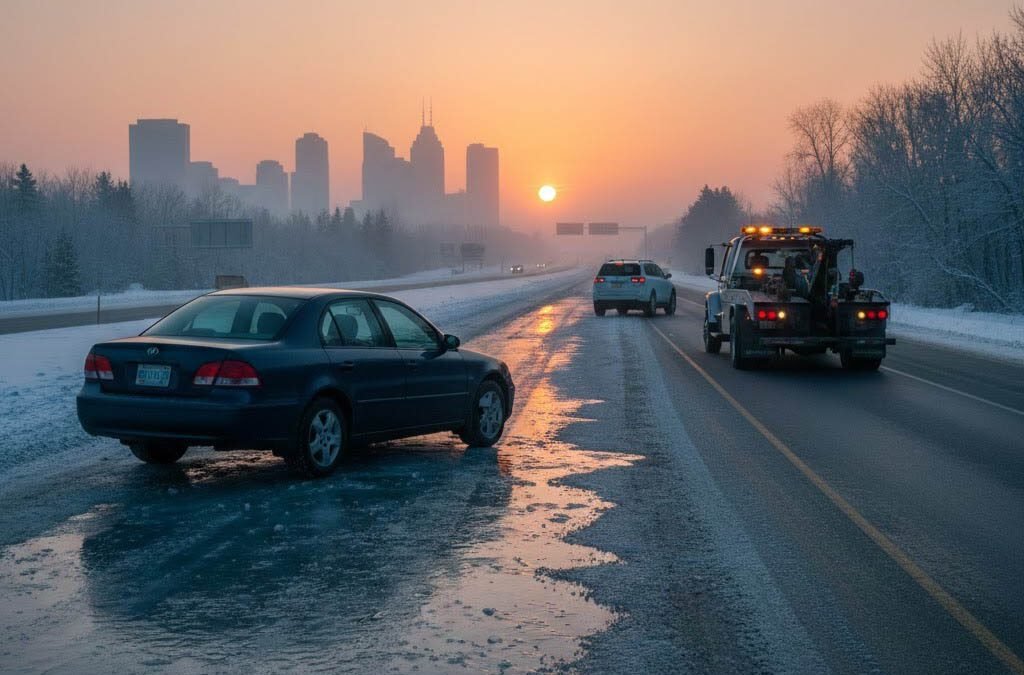
Black ice is a thin, nearly invisible layer of ice that forms on road surfaces. It usually develops when temperatures hover around freezing and moisture from melted snow, fog, or light rain refreezes on cold pavement. Because it’s transparent and blends with asphalt, it often looks like a wet road instead of solid ice.
Black ice is most common:
- In the early morning or late evening when temperatures drop
- On bridges, overpasses, and shaded sections of road
- After daytime melting followed by overnight freezing
- During light freezing drizzle or fog
What Makes Black Ice So Dangerous?
The biggest danger with black ice is that you often don’t know you’re on it until your vehicle is already sliding. Unlike packed snow, which is visible, black ice hides in plain sight. Drivers do not instinctively slow down because the road looks “wet but normal,” so they enter icy patches at higher speeds with less margin for error.
On black ice:
- Your tires have almost no grip—braking or steering can cause immediate loss of control
- Anti-lock brakes and traction control help, but can’t create traction on sheer ice
- Even small steering or braking inputs can send the car into a spin
This combination of invisibility and extremely low traction is why black ice often leads to sudden, multi-vehicle collisions, especially on highways and ramps.
What About Snow-Covered Roads?
Snow on the road is usually visible, which gives you time to adjust. Packed snow still reduces traction significantly, but it provides more grip than clear ice. Loose snow can sometimes even provide a bit of “bite” for winter tires, although braking distances are still longer than on dry pavement.
Snow becomes more dangerous when:
- It hides underlying ice or potholes
- It’s packed and polished by traffic, turning into hard, slippery surfaces
- It drifts across the road, creating uneven traction from lane to lane
- Visibility drops during active snowfall or blowing snow
The key difference: with snow, you can usually see the hazard and slow down ahead of time. With black ice, the danger often appears without warning.
Black Ice vs Snow: Which Is More Dangerous?
Both are serious winter hazards, but for most Winnipeg drivers, black ice is more dangerous because it combines three risk factors: invisibility, extremely low traction, and false confidence. Drivers often maintain normal speeds on roads that “look fine” until they suddenly lose control on an icy patch.
Snow, on the other hand, is an “obvious” hazard. When roads are visibly snow-covered, most drivers instinctively slow down, increase following distance, and drive more cautiously. That doesn’t eliminate risk, but it reduces the element of surprise.
In short:
- Black ice: Greatest risk of sudden, unexpected loss of control
- Snow: Greater overall exposure (more days), but usually easier to see and anticipate
How to Spot (or Suspect) Black Ice in Winnipeg
You often can’t see black ice directly, but you can learn to recognize the conditions where it’s likely present.
Watch for These Clues:
- Shiny “wet-looking” patches on the road when temperatures are below or near freezing
- Clear, starry nights after a day of melting snow or slush
- Sudden loss of tire noise: the road goes strangely “quiet” under your tires
- Colder spots: bridges, overpasses, and low-lying shaded areas
- Other vehicles sliding or braking unexpectedly ahead of you
How to Drive Safely on Snow-Covered Roads
While snow is easier to see, it still demands careful driving. Use these techniques whenever Winnipeg streets are snow-covered or partially plowed.
- Slow down well below the posted speed limit. Speed limits are for ideal conditions, not snow and ice.
- Increase following distance to at least 8–10 seconds behind the vehicle in front.
- Brake and accelerate gently to avoid wheel spin or skids.
- Use winter tires for better grip in cold temperatures and snow.
- Stay in the most traveled lane where the snow is more compact and predictable.
What to Do If You Hit Black Ice
Even experienced drivers can’t completely avoid black ice. If you feel your vehicle start to slide, here’s how to react to reduce the risk of a crash.
1. Stay Calm and Avoid Panic Braking
Slamming on the brakes is the worst thing you can do on black ice. It locks the wheels, removes what little traction you have left, and can send the car into a spin.
2. Ease Off the Gas
Gently lift your foot off the accelerator. Let the vehicle slow down on its own. Do not make sudden movements.
3. Steer Gently in the Direction You Want to Go
If the back of your car starts to slide, gently steer in the same direction as the skid (this is called “steering into the skid”) to bring the vehicle back in line. Avoid sharp steering corrections.
4. Let ABS and Traction Control Work
If you must brake, apply gentle, steady pressure and let your anti-lock braking system (ABS) pulse the brakes for you. Don’t pump the brakes in modern vehicles; ABS does this automatically.
5. Don’t Overcorrect
Oversteering can turn a small slide into a full spin. Make small, smooth corrections and focus on regaining control, not on staying perfectly in your lane at all costs.
When Conditions Are Too Dangerous to Drive
Sometimes the safest decision is not to drive at all. Consider postponing your trip or turning back if:
- Road reports mention black ice, freezing rain, or “travel not advised”
- You see multiple vehicles in ditches or median within a short distance
- Your own vehicle is sliding even at very low speeds
- Visibility is near zero due to snow, fog, or blowing snow
If you’re already on the road and conditions suddenly become dangerous, look for a safe place to pull over—such as a parking lot, rest area, or well-lit side street—until conditions improve.
What to Do After a Winter Slide or Ditch Accident
If your vehicle has slid into a ditch, snowbank, or guardrail, your first priority is safety.
1. Check for Injuries
Make sure you and your passengers are not hurt. If anyone is injured or if the vehicle is in a dangerous position (e.g., partially blocking traffic), call 911.
2. Stay Visible and Warm
Turn on hazard lights. If it’s safe to do so, stay inside the vehicle to stay warm and avoid standing near moving traffic.
3. Don’t Try Risky Self-Recovery
Spinning your tires or trying to “gun it” out of a ditch often makes things worse and can damage your drivetrain. Deep snow, steep embankments, or hidden obstacles can easily leave you stuck or cause more damage.
4. Call for Professional Help
Use your phone to call a trusted towing company for winch-out and recovery service or 24-hour emergency towing. Professional operators have the right equipment to recover your vehicle without causing additional damage.
How Winnipeg Towing Can Help After Black Ice or Snow Accidents
Whether you’ve hit black ice on the Perimeter, slid into a snowbank in St. Vital, or ended up in a ditch near River Heights, Winnipeg Towing is ready to help 24/7. Our team handles winter recoveries every day—so we know Winnipeg roads, common hazard areas, and how to extract vehicles safely in extreme cold.
We provide:
- Accident towing and recovery after winter collisions
- Winch-out service for vehicles stuck in snow, ditches, or medians
- Breakdown towing if your car is no longer driveable
- Insurance-approved towing with proper documentation
- Roadside assistance for flats, boosts, and lockouts in winter conditions
We serve drivers across Winnipeg, including St. Vital, River Heights, St. Boniface, Garden City, and surrounding areas.
Winter Driving Tips to Reduce Your Risk
While you can’t control the weather, you can reduce your risk of hitting black ice or losing control on snow by building good habits.
- Check the forecast before driving, especially for freezing rain or rapid temperature drops.
- Use proper winter tires rated for severe snow (3-peak mountain/snowflake symbol).
- Slow down whenever roads are wet and temperatures are near or below freezing.
- Avoid cruise control on winter roads so you can react immediately to changing traction.
- Increase following distance in all winter conditions—snow, slush, or suspected ice.
- Practice gentle inputs: smooth steering, light braking, and gradual acceleration.
- Consider a winter driving course to practice skid recovery in a controlled environment.
Frequently Asked Questions
Is black ice always invisible?
Black ice is very hard to see, but not always completely invisible. It often appears as slightly glossy, darker patches on the road that look “wet” when surrounding pavement is dry. Any suspicious shine in freezing temperatures should be treated as ice.
Are side streets safer than main roads in winter?
Not necessarily. Main roads are usually plowed and treated more often, but may see higher speeds. Residential streets can be rutted, icy, and less maintained. The safest route depends on plowing, temperature, and traffic at the time you’re driving.
Do winter tires prevent sliding on black ice?
Winter tires significantly improve traction in cold temperatures and on snow, but no tire can fully grip sheer ice. They reduce risk, but can’t eliminate it—cautious driving is still essential.
Is it safer to drive on snow than on black ice?
Generally, yes. Packed snow provides more friction than clear ice, especially if you have winter tires. The biggest danger with black ice is that drivers don’t realize it’s there until they’ve already lost control.
What should I do if someone slides into my car on ice?
First, make sure everyone is safe and move vehicles out of traffic if possible. Then exchange information, document the scene with photos, and report the collision to Manitoba Public Insurance. If your vehicle isn’t driveable, call for accident towing.
When should I call a tow truck instead of trying to drive out?
If your vehicle is stuck in deep snow, near a ditch, in a dangerous location, or you suspect mechanical damage (leaking fluids, strange noises, deployed airbags), it’s safer to call for 24-hour towing than risk further damage or another collision.
Need Help After a Black Ice or Snow Incident in Winnipeg?
Even the best drivers can’t avoid every winter hazard. If black ice or snow has left you stuck, stranded, or shaken, Winnipeg Towing is here to help—day or night.
We provide fast, professional 24-hour emergency towing, winch-out recovery, and roadside assistance across the city and surrounding areas.
Need help right now? Call us anytime at (204) 505-4621
Our team is ready to get you and your vehicle back to safety—no matter what Winnipeg’s winter roads throw at you.