
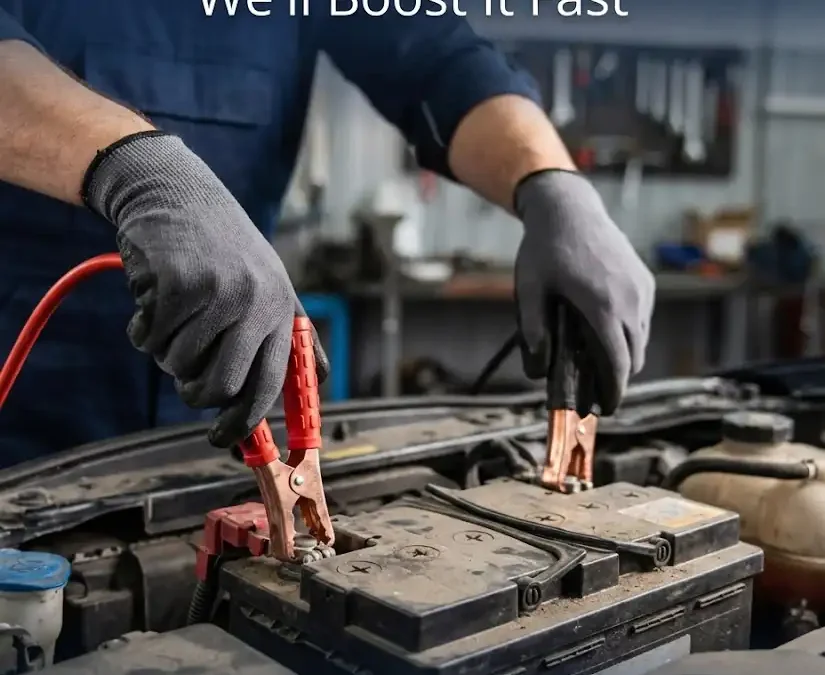
Battery Boost vs Jump Start vs Replacement: Which Do You Need?
🔋 Quick Answer
⚡ Battery Boost
Your battery is low but still functional. A boost gets you running — drive to recharge it. $55–$100
🔌 Jump Start (DIY)
Same idea, but you do it yourself with jumper cables or a portable pack. Free (if equipped)
🔄 Battery Replacement
The battery is dead for good — boosting will not fix it. You need a new one. $150–$350
Need help right now? Call (204) 505-4621 — we diagnose the problem on-site and boost or tow as needed. 24/7.
You turn the key (or press the button) and nothing happens. Or maybe the engine cranks slowly, groaning like it is fighting for its life. Every Winnipeg driver has been there — especially on a –30°C January morning. You know the battery is the problem — but now what? Do you need a battery boost? Should you try to jump start it yourself? Or is the battery dead beyond saving and needs to be replaced entirely?
These three solutions — boost, jump start, and replacement — solve different problems, and choosing the wrong one wastes time and money. A battery boost will not fix a battery that is five years old and chemically exhausted. And replacing a battery that only needed a boost wastes $150 to $300 you did not need to spend.
This guide helps Winnipeg drivers figure out exactly which service they need, how much each option costs, and how to tell the difference between a battery that just needs a boost and one that is truly done. If you need a battery boost near me right now, call (204) 505-4621 — our operators carry professional boosting equipment and can diagnose the problem on-site.
What Is the Difference Between a Battery Boost, a Jump Start, and a Replacement?
These terms get used interchangeably, but they actually refer to different things:
In everyday conversation, most people say “jump start” when they actually mean “battery boost.” The outcome is the same — your car starts — but a professional battery boost uses safer, more powerful equipment than consumer-grade jumper cables, and the operator can test your battery to tell you whether it needs replacement soon. For the full DIY jump start procedure, see our step-by-step guide on how to jump start a car safely.
How To Tell What Your Battery Needs: A Quick Diagnostic
Use these symptoms to figure out whether you need a boost, a jump start attempt, or a full car battery replacement:
Battery Boost: What It Is, How It Works, and What It Costs
A battery boost is the most common roadside assistance call in Winnipeg — especially from November through March when extreme cold drains batteries overnight. Here is exactly what happens when you call for a professional boost:
You Call (204) 505-4621
Tell us your location and that you need a battery boost. We quote you the total price upfront and give you an ETA — typically 20 to 40 minutes across Winnipeg.
Operator Arrives With Professional Equipment
Our operators carry commercial-grade portable boosters that deliver more cranking power than consumer jumper cables — important for large engines and deeply discharged batteries in extreme cold.
Battery Is Tested and Boosted
The operator inspects the battery for physical damage, checks the terminals for corrosion, connects the booster, and starts your vehicle. If available, they may test the battery’s voltage and cranking amps to determine if it is still healthy or nearing end of life.
You Drive to Recharge (or We Tow If Needed)
After a successful boost, drive for at least 20 to 30 minutes to let the alternator recharge the battery. If the operator determines the battery cannot hold a charge or the problem is not the battery, we can flatbed tow your vehicle to a mechanic or auto parts store for replacement.
A professional battery boost costs $55 to $100 in Winnipeg — the same price day or night, weekday or weekend. This is almost always cheaper than a tow to a mechanic, which is why boost calls outnumber tow calls in winter by a factor of three to one. If the problem turns out to be post-accident damage, we also handle accident towing and insurance towing with receipts for your MPI claim. For more on our battery boost service, visit the service page.
Dead Battery? We Diagnose and Boost On-Site.
If a boost is not enough, we tow you to a shop for replacement — no second call needed.
Car Battery Replacement: What It Costs and When You Need It
When a battery boost is not enough — because the battery is too old, too damaged, or has failed chemically — you need a car battery replacement. Here is what that involves and costs in Winnipeg:
Most Winnipeg auto parts stores (Canadian Tire, PartSource, NAPA) will install a new battery for free or minimal labour when you purchase it from them. Mobile battery replacement services are also available — a technician comes to your location, tests and removes the old battery, and installs a new one on the spot.
If your vehicle will not start and you cannot drive to a store, call (204) 505-4621 for a battery boost. If the boost reveals the battery is dead for good, we can tow you directly to the nearest parts store or your regular mechanic for car battery replacement. For a breakdown of what these services typically cost, see our guide on the real cost of towing in Winnipeg, or our affordable towing guide for tips on keeping costs down.
Why Winnipeg Kills Car Batteries Faster Than Almost Anywhere
Car batteries rated for 5 to 6 years in moderate climates routinely last only 3 to 4 years in Winnipeg. Here is why, according to Natural Resources Canada:
🥶 Extreme Cold Reduces Capacity
At –30°C, a battery delivers less than 50% of its rated cranking power. Meanwhile, a cold engine requires up to twice the power to start. Half the power, double the demand — that is the math that kills batteries in January.
🌡️ Temperature Swings Accelerate Degradation
Winnipeg’s range from +35°C in summer to –35°C in winter is a 70-degree swing. This extreme cycle expands and contracts the battery’s internal plates, causing physical degradation that shortens its lifespan significantly.
🚗 Short Winter Trips Drain the Battery
Driving less than 15 to 20 minutes per trip does not give the alternator enough time to fully recharge the battery — especially when the heater, seat warmers, defroster, and headlights are all drawing power. After several short trips, the battery’s charge drops below starting threshold.
🔌 Parasitic Drain
Dashcams, aftermarket alarms, GPS trackers, and other accessories that run 24/7 slowly drain the battery when the engine is off. In warm weather, this is manageable. In winter, even a small drain on top of reduced capacity can leave you stranded.
For a deeper look at this topic, read our detailed post on why car batteries die in Winnipeg winters. For broader winter preparedness, see our winter towing and survival guide.
Decision Guide: Boost, Jump Start, or Replace?
Use this scenario-based guide to determine exactly what your battery needs:
How To Prevent Dead Battery Emergencies in Winnipeg
The cheapest battery boost is the one you never need. These habits protect Winnipeg drivers from the most common battery failures:
- Get your battery tested every fall — Most auto parts stores test batteries for free in 5 minutes. If it tests weak or “marginal,” replace it before the first cold snap — do not gamble.
- Use your block heater below –15°C — Plugging in reduces the cranking power needed to start, which means less strain on the battery. A timer set for 2 to 3 hours before departure is enough. This single habit prevents thousands of battery boost calls in Winnipeg every winter.
- Take at least one 20-minute drive per week — Short trips never fully recharge the battery. A weekly highway drive at higher RPMs gives the alternator time to top off the charge.
- Clean the terminals annually — Corrosion on battery terminals increases resistance and reduces charging efficiency. A wire brush and dielectric grease takes five minutes and extends battery life.
- Carry a portable jump starter — A lithium-ion portable jump starter ($80–$150) fits in your glove box and can self-rescue you without waiting for help. Keep it stored indoors in extreme cold and bring it to the car when needed. See our winter emergency kit guide for more must-haves.
- Replace proactively at 3 to 4 years — In Winnipeg’s climate, do not wait for the battery to die. Replace it on your schedule rather than on a –35°C morning when you are already late for work. Check the date sticker on top of the battery to see when it was manufactured. And make sure you have Winnipeg Towing’s number saved — we are available 24 hours a day for boosts, towing, and all roadside assistance needs.
Battery Issues in Hybrids and Electric Vehicles
Hybrid and electric vehicles have two separate battery systems, and confusion between them is common. According to Transport Canada, here is what Winnipeg drivers need to know:
12V Auxiliary Battery (Boostable)
Every hybrid and EV has a small 12-volt battery that powers accessories, computers, and the startup sequence. This battery can die just like in a regular car and can be boosted or replaced using the same procedures. Cost to replace: $200–$400.
High-Voltage Traction Battery (NOT Boostable)
The main propulsion battery operates at 400V+ and is a completely different system. It cannot be boosted with jumper cables under any circumstances — attempting to do so is extremely dangerous. If the main battery fails, the vehicle needs specialized dealer service.
If you drive a hybrid or EV in Winnipeg and your vehicle will not start, the problem is almost always the 12V auxiliary battery — which can be boosted normally. If you are unsure, call (204) 505-4621 and describe the symptoms. Our operators handle hybrid and EV battery boost calls regularly. For vehicles that cannot be safely boosted, we provide flatbed towing to the dealership.
Frequently Asked Questions About Battery Boost and Replacement
How much does a battery boost cost in Winnipeg?
A professional battery boost in Winnipeg costs $55 to $100 with Winnipeg Towing. The price is the same 24 hours a day, 7 days a week — no after-hours surcharges. The operator comes to your location with professional boosting equipment.
Is a battery boost the same thing as a jump start?
Essentially yes — both deliver external power to start a dead battery. The term “jump start” usually refers to doing it yourself with jumper cables and a second vehicle, while a “battery boost” typically means a professional comes to you with commercial-grade equipment that is more powerful and safer than consumer cables.
How do I know if my battery needs replacing or just a boost?
If your battery is under 3 years old and this is the first time it has died, a boost is usually sufficient. If the battery is over 3 to 4 years old, has died multiple times recently, shows physical damage (cracks, swelling, leaks), or dies again within hours of being boosted, it needs replacement.
How long does a car battery last in Winnipeg?
In Winnipeg’s extreme climate, car batteries typically last 3 to 4 years. In milder Canadian cities, the same battery might last 5 to 6 years. The combination of extreme winter cold and summer heat accelerates internal degradation. Have your battery tested before each winter season.
Can I boost a battery that is completely dead?
You can attempt it, but success depends on whether the battery can still accept a charge. Professional-grade boosters used by our operators deliver more power than consumer cables and have a higher success rate with deeply discharged batteries. If the boost fails after two or three attempts, the battery is likely dead beyond recovery and needs car battery replacement.
My battery keeps dying. Is it the battery or the alternator?
If the battery dies while the car is parked (overnight or while sitting), the problem is usually the battery itself or a parasitic drain from an accessory. If the battery dies while driving or the dashboard battery light comes on while the engine is running, the alternator is likely failing and not recharging the battery. Either way, a mechanic can test both — call for a breakdown tow if the vehicle is not drivable.
Can you boost a hybrid or electric vehicle?
Yes — the small 12-volt auxiliary battery in hybrids and EVs can be boosted the same way as a regular car battery. However, the main high-voltage traction battery (400V+) cannot be boosted with jumper cables and should never be attempted. If you are unsure, call us and describe the symptoms.
How long should I drive after a battery boost?
Drive for at least 20 to 30 minutes after a boost to allow the alternator to recharge the battery. Highway driving at higher RPMs is more effective than idling or city driving. Do not turn off the engine for short stops during this recharging period — the battery may not have enough charge to restart.
Where can I get my battery replaced in Winnipeg?
Canadian Tire, PartSource, NAPA Auto Parts, Costco (members), and most mechanic shops across Winnipeg sell and install car batteries. Many offer free installation with purchase. If your vehicle will not start, Winnipeg Towing can boost it to get you to the store, or tow you if the battery is beyond boosting. We serve all Winnipeg neighbourhoods.
What should I do if my battery dies and I have a flat tire too?
Call (204) 505-4621 and describe both problems. We can handle multiple issues in one visit — a battery boost plus a flat tire change, or a tow to a shop if the vehicle needs more extensive work. It is always cheaper to address everything in one call than to make separate service requests.
Not Sure What Your Battery Needs?
Call us. We boost on-site — and if the battery is done, we tow you to a shop. One call, one trip.
24/7 service. Upfront pricing. Average arrival 20–40 minutes.